Logo Design Prices 2026: Why Does a Cheap Logo Cost You More?
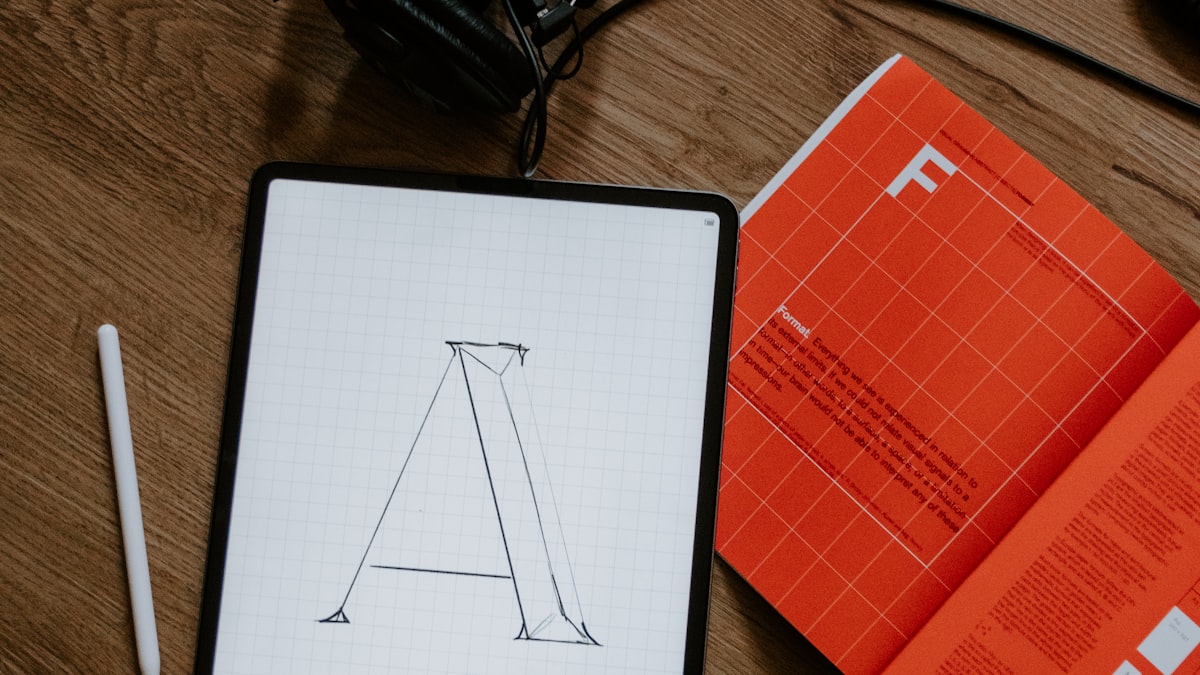
In 2026, logo design prices in the Turkey market range widely, from the symbolic fees of ready-made template tools to the six-figure amounts of professional agency projects. What creates the price difference is not the drawing itself; it is the strategy behind the work, the depth of research, the copyright and registration assurance, and how many years the logo will serve your brand without problems.
This guide was prepared for business owners and marketing managers who are planning a budget. As an AI trainer and consultant who has worked on the Turkey projects of world-famous luxury brands, I will show you both the price tiers transparently and explain, with concrete risks, why the "cheap logo" decision is often the most expensive option.
How Much Is Logo Design in 2026? Price Tiers
In Turkey, logo design is purchased in four main tiers: ready-made templates and automatic logo generators, freelance designers, professional brand designers, and agencies. The table below summarizes the general ranges observed in the Turkey market as of 2026; the figures are not commitments but information shared to guide your budget planning.
| Tier | General Price Range (2026) | What Do You Get? | Who Is It Suitable For? |
|---|---|---|---|
| Ready-made templates / automatic generators | Free - 2,000 TL | A generic image within minutes; no originality, copyright or registration assurance | Idea testing, temporary and hobby projects |
| Freelance designer | 2,500-15,000 TL | Quality and process vary by person; contract and delivery standards not guaranteed | Startups on a very limited budget |
| Professional brand designer | 15,000-60,000 TL | Industry research, concept presentation, planned revision rounds, full file set and copyright transfer | SMEs and brands aiming to grow |
| Agency / brand studio | 60,000 TL and above | Brand strategy, market analysis, corporate identity system and usage guideline | Corporate firms, rebranding processes |
Even within the same tier, prices can vary significantly by city, industry, the urgency of the job, and differences in scope. That is why, when comparing, you need to place side by side not just the figure but what is delivered in return for that figure.
What Should You Look at When Comparing Quotes?
The price difference between two quotes is often the scope difference itself. To compare them on the same page, check these five items in each quote:
- How many different concepts are presented and how many revision rounds are included in the price?
- Are the vector source files (AI, EPS, SVG) delivered?
- Is the transfer of copyright stated in writing in the contract?
- Is a similarity and registrability check performed before design?
- Are the color codes and basic usage rules included in the delivery?
A quote to which you cannot get a "yes" answer for all five questions is pricing an incomplete service, no matter how attractive the figure.
What Are the Factors That Determine Logo Design Prices?
The main factors that determine a logo's price are the designer's experience, the depth of research and strategy included in the process, the number of concepts and revisions, the scope of files delivered, and whether copyright is transferred to you.
- Experience and portfolio: The accumulated knowledge of a designer who has worked on corporate projects is reflected in the price because it eliminates potential mistakes from the outset.
- Research and strategy: Competitor analysis, a survey of the industry's visual language, and target audience work are the invisible but most valuable part of the job.
- Number of concepts and revisions: A service that presents a single draft cannot cost the same as a process with three different concepts and planned revision rounds.
- Delivery scope: Is only a JPEG delivered, or are vector source files, print and digital versions, and color and usage rules delivered?
- Copyright transfer and contract: The written transfer of copyright is a critical item that should be included in the price.
- Breadth of use: Will it be used only on social media, or will it extend to signage, packaging, vehicle wraps and print jobs?
In 2026, some professional studios, as I do myself, work with AI-assisted production processes. This approach can lower costs without compromising quality by accelerating the research and variation stages. However, the distinction must be clear here: the difference between a generic logo produced by AI alone and professional work filtered through strategy is precisely the tier difference you see in the table.
Why Does a Cheap Logo Cost You More? 5 Real Risks
A cheap logo brings most businesses a cost far above the fee first paid, due to registration barriers, copyright uncertainty, endless revisions, technical scaling problems and weak brand perception. These five risks show why the thought "a logo is a small job anyway" is misleading.
1. Registration Problem: Similar Logo, Rejected Application
Logos produced by templates and automatic generators carry the risk of resembling other brands because they draw on the same publicly available icon and font libraries. When your trademark registration application is rejected on grounds of similarity, or worse, when you receive a legal warning due to confusion with a registered trademark, the cost of a new design, all the materials to be reprinted, and the time lost merge into a single bill. In a professional process, a pre-design similarity check reduces this risk from the very start.
2. Copyright Uncertainty: Is Your Logo Really Yours?
In work without a contract or invoice, copyright often remains unresolved. The designer may sell the same work to another client, the license of the stock image used may not cover commercial use, or you may face a claim years later. If the ownership of your brand's most visible asset is uncertain, every investment you make on top of that asset is at risk. A written copyright transfer is the non-negotiable part of a professional quote.
3. The Revision Vicious Circle: The "Just One More Touch" Trap
In low-priced work, the process usually proceeds without a plan: a draft arrives before a brief is taken, it is not liked, and trial-and-error rounds begin. Each round consumes both your working time and the project's timeline; in the end, you either settle for a "good enough" result out of exhaustion, or the budget grows with extra fees. In a professional process, because there is a concept presentation and defined revision rounds, the result is based on method, not chance.
4. Scaling Problem: The Logo That Looks Fine on Screen but Falls Apart in Print
A logo whose vector source file is not delivered may look good on a phone screen, but it pixelates when enlarged for signage, packaging or a trade fair stand. I frequently see examples of this in the e-commerce packaging work I run under my e-commerce packaging brand: brands that come to print with low-resolution, RGB and background-embedded files either settle for a poor result or have to have the logo redrawn from scratch. Correct delivery covers AI/EPS/SVG source files, CMYK and RGB versions, and transparent-background variations.
5. Brand Perception: A First Impression Is Not Given Twice
Your customer sees your logo before they know you. A generic, unbalanced or industry-incompatible logo sends a silent message that makes people question your prices, your quality and your reliability. The clearest lesson I gained on luxury brand projects is this: visual consistency directly affects the price the customer is willing to pay.
The real cost of a cheap logo is not the fee you pay; it is the customer you miss, the registration you postpone, and the design you will have redone from scratch two years later.
How Do You Give a Good Logo Brief?
A good logo brief is a short document that defines, in clear sentences, what your business does, whom it addresses, how it differs from competitors, and where the logo will be used. The clearer the brief, the shorter the process and the less revision is needed; that is, a good brief directly earns you money.
- Describe your business in one paragraph: What do you sell, whom do you sell to, what makes you different?
- Describe your target audience: Who is your "ideal customer" with their age range, income level and expectations?
- Show three to five competitors: Which brands will you stand alongside, and which ones should you not resemble?
- Share examples you like and dislike: Instead of "make it modern," give concrete visual references; your taste comes across more clearly than words.
- List the areas of use: Website, social media, signage, packaging, vehicle wraps, invoices... Where will the logo live?
- State constraints from the start: If there is a color, symbol or name that must be preserved, put it on the table at the first meeting.
- Clarify the decision-maker: Who will give approval? A five-person "approval committee" is the most common process-lengthener.
Before sending the brief, be sure to review the designer's past work; the portfolio is the most honest document about the quality of their work. You can review my work on my portfolio page.
Logo or Corporate Identity? The Right Home for Your Budget
A logo is the brand's signature; corporate identity, on the other hand, is the system that ensures that signature looks consistent on every surface, from a business card to a website, from packaging to social media templates. If you are a newly established business that will appear across multiple channels, considering a corporate identity design package instead of just a logo is more economical in the long run; because whenever a new need arises, you produce from within a ready-made system instead of paying a design fee from scratch.
The logo decision is in fact a brand decision. If you want to discuss the whole picture, from naming to positioning and from visual language to communication tone, my brand consultancy service looks at this entire picture.
Conclusion: The Right Question Is Not "How Much Does It Cost?" but "What Does It Cost?"
When determining the budget you will allocate for logo design in 2026, ask yourself this question: how many years will this logo carry my brand, and if it turns out wrong, what will it cost me to fix it? A logo that is registrable, whose copyright belongs to you, that works at every size and carries your brand's character is not an expense but one of your business's longest-lasting investments.
If you would like to discuss a logo process that plans registration assurance and technical accuracy from the outset for your brand, you can write to 0542 783 42 15 via WhatsApp or fill out the contact form. Let me listen to your project and prepare a transparent quote appropriate to its scope.
Frequently Asked Questions
How much does professional logo design cost on average in 2026?
In the Turkey market, the general range for working with a professional brand designer is 15,000-60,000 TL as of 2026; agency projects go to 60,000 TL and above. These figures are not commitments but information based on market observation. The exact price is finalized with a quote according to scope, number of revisions and copyright transfer terms.
Does it make sense to make a free logo with Canva or AI tools?
It is useful for testing the idea stage, but it is a risky choice for the permanent logo of a commercial brand. Because these tools draw on publicly available template and icon libraries, they cannot provide originality and registration assurance. There is always a chance that the same image will appear on another brand.
How long does logo design take to deliver?
A professional logo process, including research, concept presentation and revision stages, usually takes 2-4 weeks. AI-assisted production processes can shorten this timeline. A promise to deliver within a few hours, however, is usually a sign that the research stage has been completely skipped.
Which files should I request at logo delivery?
Be sure to request the vector source files (AI, EPS or SVG), CMYK versions for print and RGB versions for digital, transparent-background PNGs, and color, black and white variations. Without a vector file, your logo pixelates when enlarged to signage or packaging size and becomes unusable in print.
Is logo registration included in the design price?
Usually no; trademark registration is a separate legal application made to the Turkish Patent and Trademark Office and is not included in most design quotes. A good designer reduces the registrability risk by performing a similarity check before starting the design. It is recommended that you carry out the registration application with a trademark attorney.
Should I have just a logo made, or a corporate identity?
If you are a newly established business that will appear across multiple channels, corporate identity is the more sensible investment. A logo on its own is a signature; corporate identity, on the other hand, is the system that ensures consistency from a business card to a website, from packaging to social media. Buying it as a package is more economical in the long run than paying a separate design fee for each new need.
Want to learn to do this with AI?
I teach step by step how to do everything covered in this article with AI, in one comprehensive training. If you'd rather have it done for you, write for consulting and I'll get back to you the same day.
Message on WhatsApp Explore the trainingFrom Rebel Co. Group

Sefa Aydın · AI Trainer & Consultant
An AI trainer and consultant who has worked on the Turkey projects of world-famous luxury brands. He teaches, hands-on, how every kind of work is done with AI: design, video, branding and vibe coding.
About Sefa Aydın → LinkedIn ↗